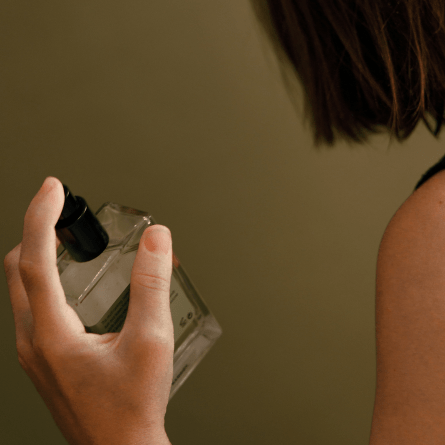
The short answer is yes: you can pack makeup and cosmetics in your hand luggage. But there are rules you should know before packing to avoid surprises at security. This guide explains exactly what you can bring, in what format, how many containers fit in your bag, and what makeup tricks save space without sacrificing your routine .
The 100ml rule: what exactly does the regulation say?
Since 2006, all European airports have applied the same rule for liquids in hand luggage, regulated by AENA in Spain. The rule is simple: each container of liquid, cream, gel, or aerosol cannot exceed 100 ml in capacity , and all such containers must be placed inside a transparent, resealable zip-top plastic bag with a maximum capacity of 1 liter (approximately 20 x 20 cm). Only one bag per passenger is allowed, including children.
There's an important distinction that many people are unaware of, and it causes confusion at security checkpoints: what matters is the size of the container, not the amount of liquid inside . A 150ml jar of cream that's half empty won't pass inspection because the container itself exceeds 100ml. If you want to take that cream into the cabin, you'll have to transfer it to a travel container of 100ml or less.
The only exceptions to this rule are liquid medications needed during the flight (which must be declared at security and a prescription is recommended) and baby food. There are no size or quantity limits on checked baggage: you can bring as much as you like.
A significant development for 2025-2026: AENA is implementing next-generation 3D scanners which, once certified by the European Civil Aviation Conference (ECAC), could eliminate the 100 ml restriction at Spanish airports. Some airports in the UK and Italy have already lifted the limit using this technology. For now, the current regulation remains in effect in Spain, so the 100 ml rule still applies until the change is officially confirmed.
Which cosmetics and makeup count as liquids (and which do not)?
The rule applies to liquids, gels, pastes, creams, sprays, and foams. This is broader than it seems and covers a good portion of what you'd find in any travel toiletry bag or makeup routine. The key to staying on track is the practical rule: if the product can be poured, squeezed, sprayed, or spread, it goes in the clear bag.
Cosmetics and makeup that DO count as liquids:
- Liquid foundations, BB creams and tinted moisturizers
- Liquid and cream concealers
- Mascaras: even though the brush is solid, the formula is liquid
- Lip glosses, lip glosses and cream or gel lipsticks
- Liquid and gel eyeliners
- Cream or gel-textured eyeshadows
- Nail polish and nail polish remover
- Setting sprays, sealing brushes or setting sprays
- Moisturizing creams, serums, facial oils and eye creams
- Sunscreens in cream, gel or spray form
- Cleansing milks, micellar water, toners and micellar water
- Shampoo, conditioner and hair masks
- Perfumes and colognes (including small atomizers)
- Roll-on or spray deodorants
- Toothpaste and mouthwash
Cosmetics and makeup that do NOT count as liquids:
- Powder makeup: eyeshadows, blushes, pressed powders, loose powders, bronzers and powder highlighters
- Solid lipsticks (stick lipsticks, not cream or gel)
- Solid eye and lip pencils (kohl, lip liners)
- Solid stick makeup: stick concealers, stick highlighters, stick blush
- Eyebrow mascaras in very dense gel or solid pencil form: it depends on the texture; if it's a fluid gel, it counts as a liquid
- Deodorants in stick or solid form
- Solid soaps and shampoos
- Moistened makeup remover wipes or micellar wipes (count as wet solid objects)
The rule of thumb: if your makeup has a powder texture or is completely solid, it can go freely in your makeup bag . Opting for powder or stick formulas is the most effective strategy for maximizing space in your liquid makeup bag.
How many 100ml bottles can you take on the plane?
The transparent bag has a capacity of 1 liter , which in theory allows you to carry up to 10 containers of exactly 100 ml . In practice, due to the irregular shapes of jars, tubes, and bottles, the actual number is usually between 7 and 8 products, depending on their shape . A wide jar of cream takes up more space than a narrow tube, even if both are 100 ml.
To be specific: a 1-liter bag has an approximate capacity of 20 x 20 cm. In it, you can fit, for example, an eye cream (15-30 ml), a serum (30 ml), a moisturizer (50 ml), a mini perfume (10-30 ml), mascara (10 ml), toothpaste (75 ml), and foundation (30 ml). That will fill the bag quite a bit. The key is to do this exercise before arriving at the airport, not at security.
A very useful trick : transfer your products to reusable travel containers of 50-80 ml. Besides easily meeting the size limit, smaller sizes weigh less, take up less space in your bag, and eliminate the risk of accidentally packing a larger container. Many brands now offer official mini sizes or travel sizes, which further simplifies packing your toiletry bag.
What about duty-free purchases? Liquids bought at airport shops after security can be carried in the cabin without size restrictions, provided they are in the official sealed STEB bag (with a red border) and contain the receipt . Be aware if you have a connecting flight: security at your layover airport may open and inspect the bag, and if they deem the items suspicious, they may confiscate them. To avoid this, do not open the bag until you reach your final destination.
How to pack your makeup bag for the plane without stress
Packing your travel toiletry bag is largely an exercise in selection. These are the criteria that best help you reduce the amount of liquids in your bag without sacrificing anything essential:
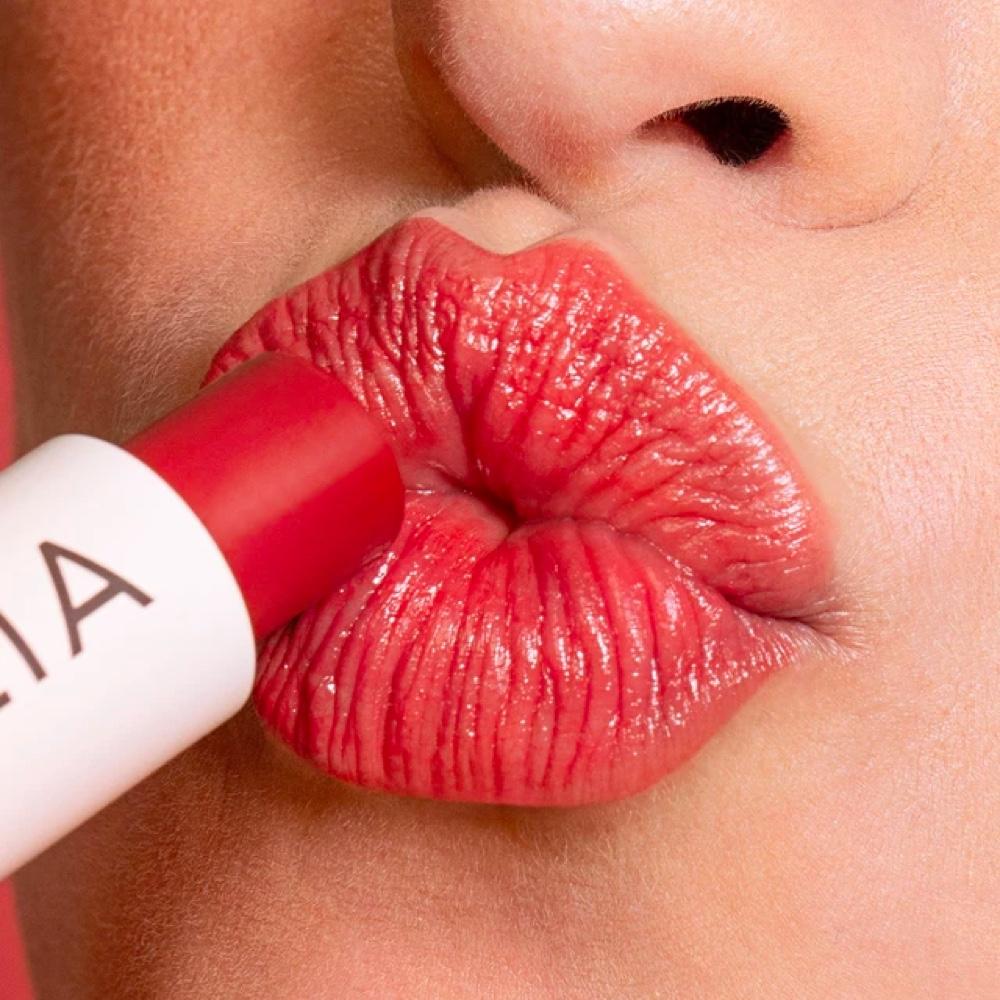
- Prioritize multifunctional products. A product that does two or three things only takes up a single space in your bag. A stick that serves as blush, lipstick, and highlighter is the perfect example: it saves you two containers at once. Ilia's Multi-stick is exactly that: blush, lipstick, and highlighter in solid form. It doesn't take up space in your liquid makeup bag because it's a solid.
- Replace liquids with solids whenever possible. Solid shampoo, bar facial soap, stick deodorant, eyeliner pencil instead of liquid gel: each substitution frees up a slot in the clear bag for something that doesn't have a solid alternative.
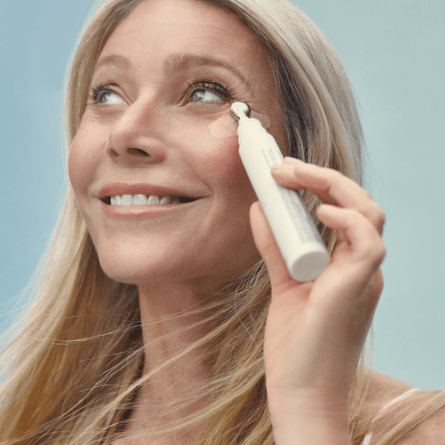
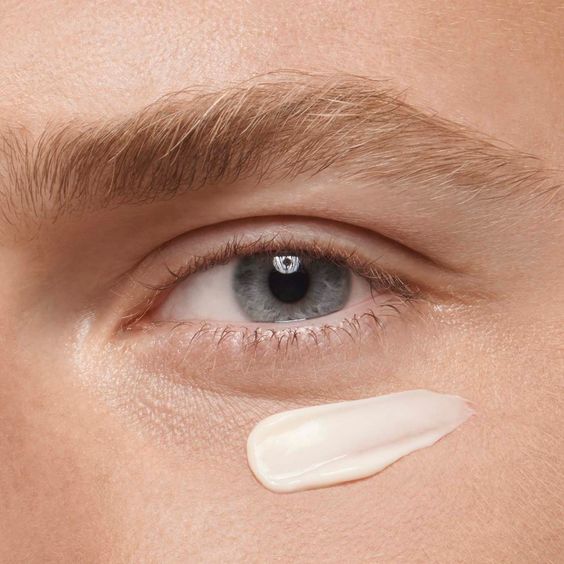
- Pack your eye creams: they're small but crucial. Most eye creams come in 15-30 ml sizes, making them perfect for travel. Bioeffect's EGF Eye Serum comes in a compact roll-on format that takes up very little space and provides cell regeneration even during long journeys. Gallinée's Eye Contour Cream (€25) is another small-sized option with a gel texture that absorbs instantly.
- Use reusable containers for your favorite creams. If you have a large-format moisturizer or serum that doesn't come in a travel size, invest in a set of 50-100 ml silicone travel jars and tubes. They're airtight, lightweight, and can be reused indefinitely.
- Pack your bag at home , not at the airport. Before leaving, check that all containers have a visible label with their volume, that none exceed 100 ml, and that the bag closes properly. At security, the bag goes in a separate tray, outside of your hand luggage.
- Perfume: mini atomizers or duty-free. A 100ml perfume barely meets the size limit, but it takes up almost all the space available for that type of product. It's better to carry a refillable 10-15ml travel atomizer or buy the perfume directly at the duty-free shop.
What to do with your skin during a flight
The interior of an airplane has a relative humidity of between 10 and 20%, well below the 40-60% that skin needs to stay hydrated. On flights longer than two hours, this dryness translates into tight, dull skin with more visible wrinkles upon arrival. Having your skincare essentials in your carry-on luggage, not just in the hold, makes all the difference.
For daytime flights, sunscreen is the product you'll most likely want to avoid. UVA radiation penetrates airplane windows just as effectively as at ground level ; however, exposure is more intense at higher altitudes. Packing an SPF 50 sunscreen in your carry-on bag—like the The Daily SPF50 by AIME in its 30ml format, which fits perfectly in the 100ml bag— allows you to reapply if the flight is very long and arrive with the skin barrier intact.
A moisturizer or serum is the other essential. A lightweight serum with hyaluronic acid absorbs in seconds and counteracts environmental dryness without adding weight. To carry your complete skincare routine in your fluids bag, Laconicum's travel-friendly collection brings together products in specially selected formats to fit in hand luggage, without sacrificing the quality of the assets.
During a flight, the simplest and most effective trick is to avoid heavy or full-coverage makeup, which dries out the skin even more when it interacts with the dry cabin air. Opting for a light tinted moisturizer instead of a high-coverage foundation allows you to care for your skin while maintaining a polished look. Upon landing, applying eye cream and refreshing your moisturizer is the best way to restore the rested appearance that the flight has taken away.