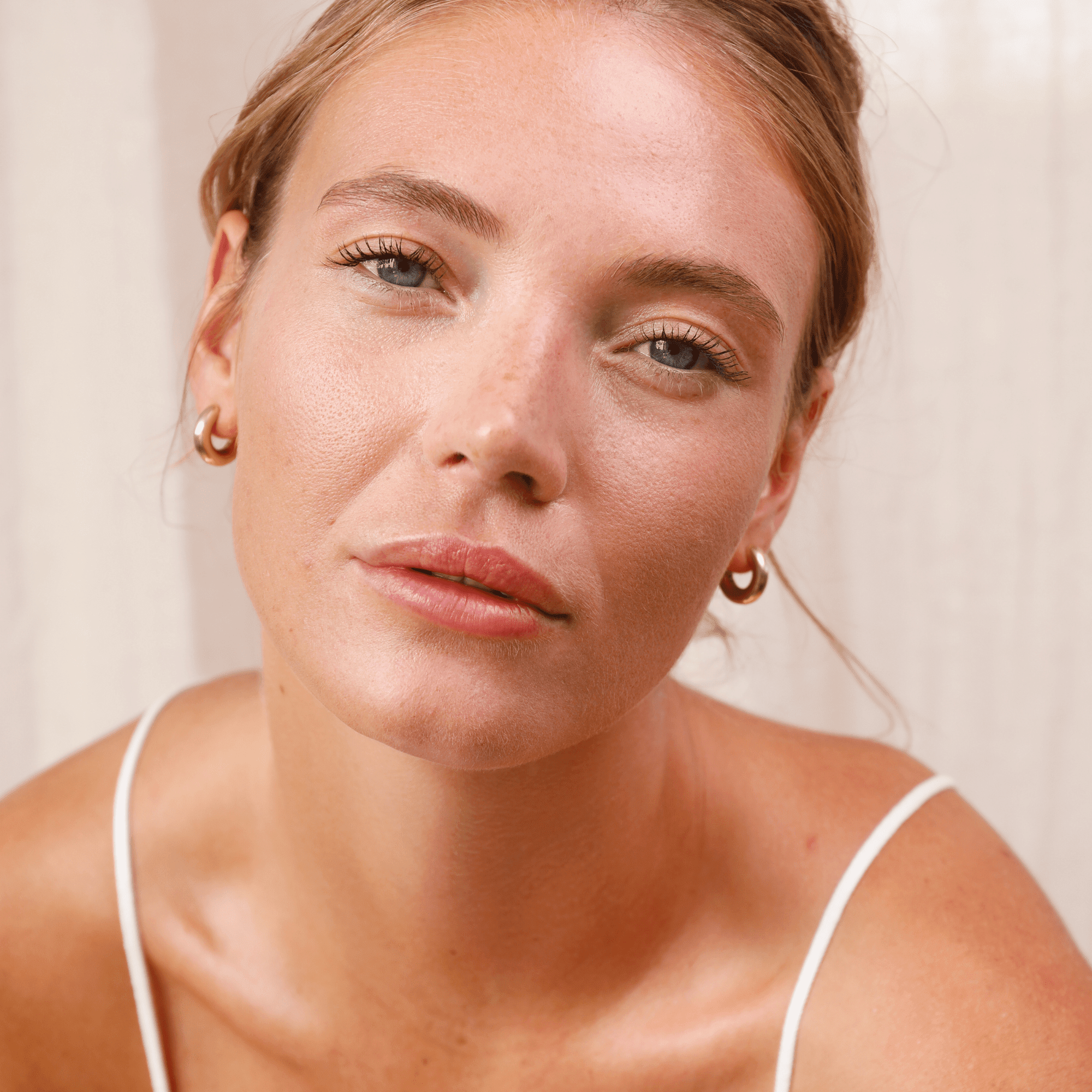
The perfect moisturizer for our life doesn't exist. Just like the house of our dreams, the job of our dreams, or the gray t-shirt of our dreams don't exist. Life is ruthless like that. What exists is what serves us at a particular moment in our lives. This isn't a cynical or skeptical discourse; on the contrary, it's playful and leads us to experiment: what is life without adventure? Let's talk about moisturizers. Let's talk about serious matters.
- Which moisturizer do I need?
- How to choose the right moisturizer for your skin type
- Difference between dry skin and dehydrated skin
- Moisturizing cream according to age
- What does your skin need: hydration, radiance, or firmness?
- Moisturizing cream for day or night
- Best moisturizer depending on the time of year
- Types of textures in moisturizing creams
- Moisturizing cream with or without sun protection
- How much to invest in a moisturizer
- Frequently asked questions about moisturizing creams
What moisturizer do I need and what is it for?
The adjective "moisturizing" is often used interchangeably with "day cream." We use it out of historical habit when, in reality, we often want to explain what a moisturizing cream is and, above all, what its purpose is in our daily routine: what cream can I use that will take care of my skin?
In many cases, we need to hydrate it; in others, nourish it; and in others, provide firmness or luminosity, functions that are not always fulfilled by the same cream.
How to choose the right moisturizer for your skin type
That's the first question we have to ask ourselves: what moisturizer is right for my skin type ?
It's a key factor in this choice. To know what our skin is like, we need to cleanse it, wait five minutes without applying anything, and look in the mirror. A very common mistake is confusing dry skin with dehydrated skin.
In theory, it's very easy to solve: dry skin lacks lipids, dehydrated skin lacks water. In practice, it's more complicated, since dry skin often appears dehydrated, the amount of lipids it contains is lower, and therefore, the barrier function these lipids provide against water evaporation is reduced.
Moisturizing cream for dry skin
If you have dry skin, you'll notice it feels tight, requiring frequent and frequent hydration. In these cases, a moisturizer for dry skin is essential to relieve discomfort and restore comfort. Your moisturizer should be rich, enveloping, and deeply nourishing—a truly nourishing cream for dry skin.
If you want to delve deeper into these types of formulas and find options adapted to different needs, you can consult our selection of moisturizing creams for dry skin .

Moisturizing cream for combination skin
You'll notice that the cheekbones are drier, while the forehead, nose, and chin may be shiny. In this case, it's best to choose a moisturizer for combination skin, which can balance the different areas of the face without weighing it down.
Your moisturizer should have a light texture, and oil-free is even better. Look for formulas that hydrate without weighing your skin down and help maintain comfort throughout the day. You can find more options in our selection of moisturizers for combination skin .

Moisturizing cream for oily skin
Look for an oil-free moisturizer that helps keep your skin balanced without adding shine or a heavy feeling. A moisturizer for oily skin should hydrate without clogging pores and provide comfort, even when your skin tends to produce more sebum.
Choosing an oil-free cream for oily skin allows you to maintain the necessary hydration without compromising the formula's lightness. If you'd like to explore these types of products, you can check out our selection of oil-free moisturizers .
Difference between dry skin and dehydrated skin
-
DRY SKIN: You'll notice it feels tight, needing to apply hydration quickly. Your moisturizer will be rich and nourishing.
- DEHYDRATED SKIN: We recommend being very consistent with hydration: moisturize between hours with a mist or spray. You can use ingredients that are suitable for any skin type, but we especially recommend a moisturizer with hyaluronic acid or retinol.
Moisturizing cream for dehydrated skin
We recommend being very consistent with hydration, especially when your skin feels tight or dull. In these cases, a moisturizer for dehydrated skin is key, but so is boosting hydration between meals with a facial mist or spray.
These formulas typically incorporate ingredients that work well on almost any skin type, but we especially recommend those with hyaluronic acid for dehydrated skin, as they help attract and retain moisture. In some cases, and always judiciously, they may also include retinol, adapted to hydrating formulas that complement and improve skin texture without compromising comfort.
Check out the moisturizers with hyaluronic acid , perfect for dehydrated skin.
Moisturizing cream for sensitive skin
Choose moisturizers from brands that formulate with sensitive skin in mind, such as Pai Skincare. A good moisturizer for sensitive skin considers not only the active ingredients it contains, but also how they are integrated into the formula: even ingredients that, in theory, might be harsher can be used gently if the formulation is well thought out.
Furthermore, these types of brands often opt for fragrance-free creams for sensitive skin, thus reducing the risk of irritation or reactions. Many of them offer guarantees on their products, even after they've been opened and used. Always ask before buying to avoid the risk of throwing the product away as soon as you open it.

Moisturizing cream according to age
As the years go by, the demands increase. There are always exceptions. We all know people who look fantastic at 70 (hello Meryl Streep) and others who have very aged skin at 30 (hello, we're in touch).
Moisturizing cream for ages 25-30
You can use practically any moisturizer. Look for one that suits your skin type and feels nice. After 30, it's a different story.
Moisturizing cream for ages 30 and up
Invest more time and money in your moisturizer. Look for one that contains ingredients like hyaluronic acid, retinol, or vitamin C.
Moisturizing cream for ages 50 and over
Choose a highly nourishing moisturizer that combines anti-aging ingredients and, if you wish, complement your routine with a serum that delivers these active ingredients in high concentrations, according to your skin's needs. For those looking for specific options, you can consult our selection ofcreams for mature skin , designed to deeply hydrate and improve the skin's elasticity and radiance.
Moisturizing cream for adult acne
If you're still getting breakouts, your skin may be sensitive and reacting to an ingredient. Try creams formulated for acne-prone skin and for sensitive combination skin.
What your skin needs according to its goals: hydration, radiance or firmness
- Mature skin tends to need more hydration and nutrition, as the production of collagen and hyaluronic acid decreases with age.
- Younger skin, on the other hand, often needs more luminosity or to even out the tone, either due to acne marks or to control a breakout.
Intense hydration: hyaluronic acid
To keep your skin hydrated and supple, a moisturizer with hyaluronic acid is an excellent choice. This ingredient works by retaining water in the deeper layers of the skin, providing long-lasting hydration and a comfortable feel. If you'd like to explore more products that incorporate this active ingredient, check out our selection of moisturizers with hyaluronic acid .

Luminosity and even tone: vitamin C and niacinamide
If you're looking for a brightening effect and an even skin tone, opt for a moisturizer with vitamin C or a niacinamide cream. These ingredients help reduce the appearance of dark spots, improve texture, and give your face a more radiant look. To discover the best options, check out our guide to creams with vitamin C.

Expression lines and firmness: retinol and peptides
To target fine lines and improve skin firmness, choose a retinol cream or an anti-aging cream that combines retinol with peptides. These active ingredients stimulate cell renewal and collagen production, providing a firming effect. You can browse our selection of retinol treatments to find formulas tailored to your needs.

Moisturizing cream for day or night
Yes, you read that right: moment of the day. And we're not just talking about day cream and night cream. Midday creams are one of our favorite non-essential products. That moment of the day when you've just gotten home from work and are getting ready to go out to dinner. We've already talked about how a true beauty freak creates their own beauty routine.
You could use your day cream, of course, but why not take this opportunity to try other types of moisturizers? Look for a refreshing moisturizer that erases the day's fatigue and gives you a radiant glow. Or an oil that awakens your face. But if we want to be proper, we'll handle the day and night routines like normal people do.
To choose your day or night moisturizer, here are the main things you should keep in mind:
Moisturizing day cream
Lightweight texture + sun protection.
Night moisturizer
Rich textures. Perfect for nighttime treatments .
Best moisturizer depending on the time of year
This factor is simple and easy to apply:
Moisturizing creams for summer
Choose lightweight moisturizers with high sun protection during the day, and nourishment and regeneration products at night.
Moisturizing creams for winter
We can use the same cream for day and night. We shouldn't be saying this too loudly, but no one here is listening. Check out some nourishing creams that are perfect for winter.
Types of textures in moisturizing creams
In many cases, this will be the deciding factor when choosing a cream. Neither retinol nor hyaluronic acid: sometimes what we feel when we apply it matters more than what its formula promises. The textures of moisturizers directly influence the experience and consistency of use, and not all work equally well for all skin types.
There are different types of moisturizers, from rich, enveloping formulas to ultra-light options that absorb in seconds. The choice of texture—balm, cream, emulsion, or gel-cream—depends on your skin type, the time of day, the weather, or even the feeling you want after your routine.
Because, in the end, the best cream isn't always the one with the most active ingredients, but the one you feel like using every morning and every night.
Moisturizing gel cream
If it were a food, it would be… a flan. Sensation: light and fresh.
Light moisturizing cream
If it were a food, it would be… hot chocolate from a fondant. Sensation: milky and comforting.
Rich moisturizing cream
If it were a food, it would be… honey or dulce de leche. Sensation: rich and thick.
Here you can see some nourishing creams .
Moisturizing cream with or without sun protection
Skin needs to be protected from the sun. We won't repeat ourselves.
Sun protection is non-negotiable, although you can choose whether to include it in your daily routine using a moisturizer with sun protection or to apply it afterward, as a separate step.
In any case, ideally, sunscreen should be the final step in your skincare routine. Opting for a moisturizer with SPF makes this daily step easier and helps you stay consistent. We've said it several times; we know, but it's important.
How much to invest in a moisturizer
If you're going to invest in a cosmetic product, invest in a moisturizer. But how much does it really cost, and what's the price of a reasonable moisturizer? Expensive creams are usually good. It's not a scientific fact, but it's close. There are also great creams for around €20 that can work well if you don't have any specific skin problems or if you're in your twenties.
That said, the most expensive option isn't always what your skin needs. Everyone, within their budget, should look for what their skin requires. And there are options for everyone, from a good, affordable moisturizer to more sophisticated formulas. We don't buy a face moisturizer for less than €30. Starting at €40, you're guaranteed a minimum: quality ingredients are worth money, and so is the talent of those behind the brands.
Frequently asked questions about moisturizing creams
WHEN SHOULD YOU APPLY A MOISTURIZER?
Knowing how to apply moisturizer and in what order is key for it to truly work. The order would be: 1) Cleanser 2) Serum (optional) 3) Moisturizer 4) Sunscreen. Often, all you need is a good cleanse and the right moisturizer for your skin to look plump and calm.
The spatula has a purpose, and it's not to sit at the bottom of the box. It's there to prevent contaminating the cream with bacteria from your hands. Ideally, you should use it to avoid touching the formula directly, although, let's be honest, we don't always use it either. That's perfectly fine: you can apply the moisturizer without the spatula as long as your hands are clean.
WHAT IS THE CORRECT AMOUNT?
The size of a pea. No more, no less. Cosmetics, in general, last much longer than we usually think, and you only need a small amount for each application to get good results.
CAN I USE RETINOL AND VITAMIN C WITH MY MOISTURIZER?
Of course, you can use it. If your moisturizer doesn't contain these ingredients, apply the serum with these active ingredients first, and then the moisturizer. If you use retinol and vitamin C, apply the vitamin C in the morning and the retinol at night.
Should I apply SPF to my moisturizer or separately?
Whatever works best for you. There's no difference between applying a moisturizer and then SPF, or a moisturizer with SPF. The important thing is to protect yourself from the sun every day.
DOES SKIN TEXTURE CHANGE WITH AGE?
Yes, it can change with age and also with hormonal changes, the weather...